





PRO Line PVD 200
REQUEST A QUOTE
PRO Line PVD 200
Versatile Sputtering, Electron Beam, & Thermal Evaporation Thin Film Deposition System Platform

Automate
Your Lab.
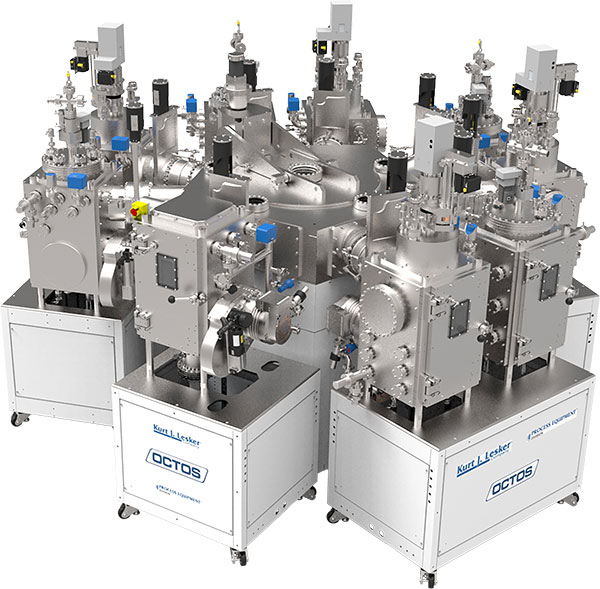
The Kurt J. Lesker Company® PRO Line PVD 200 is a modular, full featured thin film deposition system allowing 8" wafer transfer, up to 8 sputter cathodes and eKLipse advanced control software. With more than 500 units in service worldwide, the PVD series is a proven, robust, and versatile design consisting of the PVD 75 and 200 platforms. The PRO Line PVD 200 builds on the successes of the original design with improved system base pressures and pump down times. A technically superior chamber design, an industry best software control system with advanced programming capability, automatic substrate loading, and numerous features for optimized thin film performance are a few of the key advantages offered in this innovative, best of class design.
Available Models
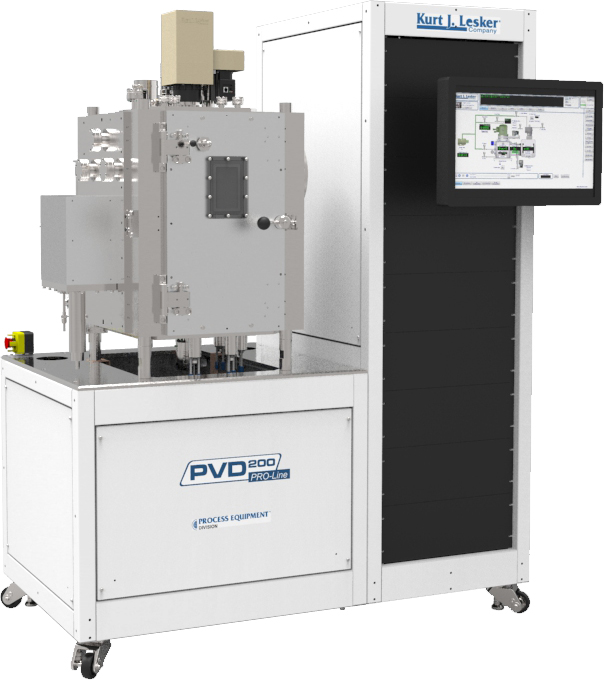
PVD 200 Open Frame
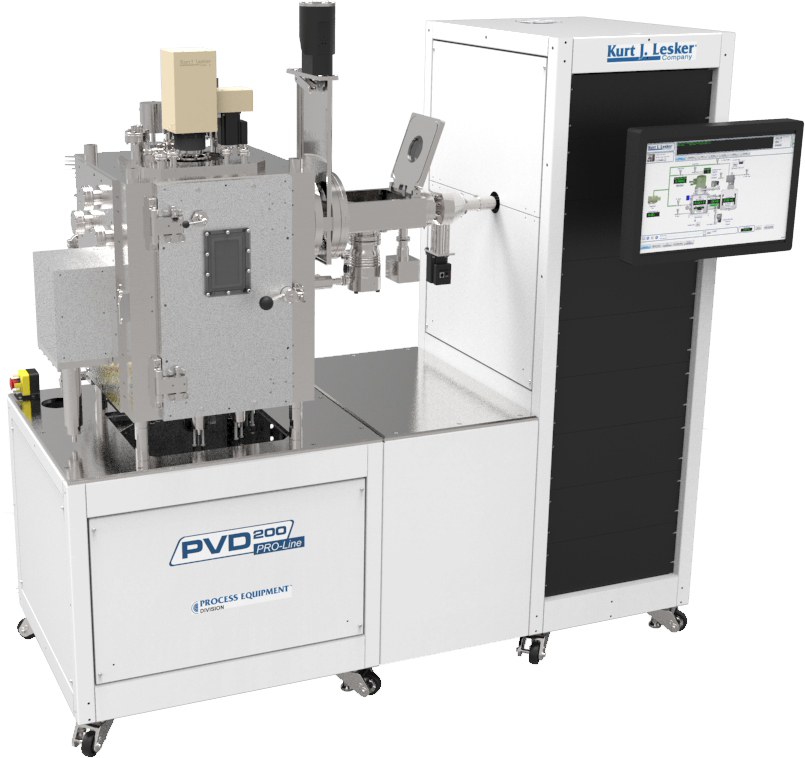
PVD 200 with Load Lock
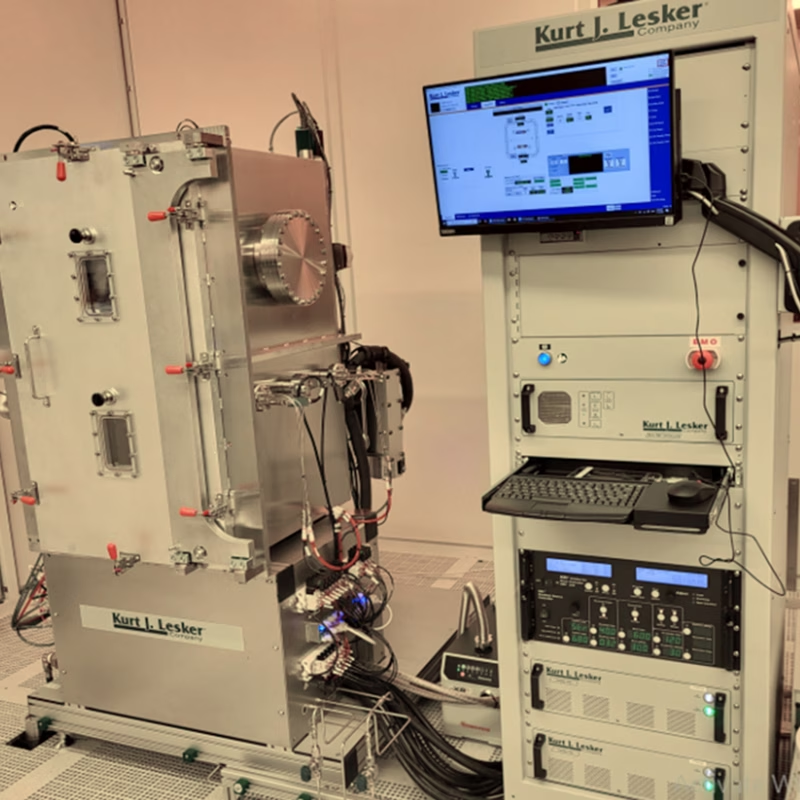
PRO Line Indium 200
PVD200 Dual Chamber
PVD 200 Dual Chamber
Specifications
Chamber
Box Chamber, 304 Stainless Steel Chamber
Internal Dimension Options:
For Sputtering or Shorter Throw Evaporation/E-Beam:
19.25" Wide x 20.5" Deep x 24" High
(488.95mm Wide x 520.7mm Deep x 609.6mm High)
Aluminum, O-Ring Sealed, Hinged, Front Access Door
Box Chamber, 304 Stainless Steel Chamber
For Sputtering Applications or Long Throw Evaporation/E-Beam:
19.25" Wide x 20.5" Deep x 36" High
(488.95mm Wide x 520.7mm Deep x 914.4mm High)
Aluminum, O-Ring Sealed, Hinged, Front Access Door
Deposition Techniques
Thermal Evaporation
Up to Six 4" Individual Boats
TORUS Magnetron Sputtering Sources
Up to Eight 2" or 3" Sources
Electron Beam Evaporation Source
4 Pocket 8cc
8 Pocket 12cc
6 Pocket 20cc
LTE10 Organic Deposition Sources
Up to Two, 10cc Sources
Additional Options
Combinations of the Above Techniques
Custom Configurations Are Available Upon Request
Deposition Orientation
Thermal Evaporation
Up
TORUS Magnetron Sputtering Sources
Up, Down, or Side-Sputter
Electron Beam Evaporation
Up
LTE Organic Deposition
Up
Substrate Manipulation
Rotation, Heating, Cooling, Bias, Load Lock Compatible
Power Supplies
DC, PDC, RF, MF, and HIPIMS Power Supplies
PUMPING PERFORMANCE
The PRO Line PVD 200 offers four types of high vacuum pumping on its process chamber: Pfeiffer 790 L/s turbomolecular pump (standard), Pfeiffer 1250L/s turbomolecular pump (optional), Brooks CTI-8F 1500 L/s (optional Cryo), and Brooks CTI-10 3000 L/s (optional Cryo). Pfeiffer turbomolecular pumps being a good choice for overall cost effective high quality pumping particularly for sputtering applications. The Brook CTI cryo pumps find use in applications that require the lowest vacuum possible, particularly for thermal evaporation and electron beam applications.
The chart (below) demonstrates average expected pumping performance by pump type for an outfitted PRO Line PVD 200 process chamber that is clean and dry with (5) TORUS 3" Mag-keeper sources installed and a 3' long 1.5" metal flex bellows roughing line.
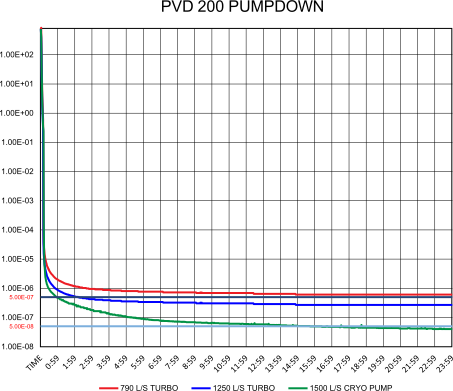
*Pump curves for a clean dry and empty PRO Line PVD 200. Pumping performance is depending on chamber conditions and components installed.
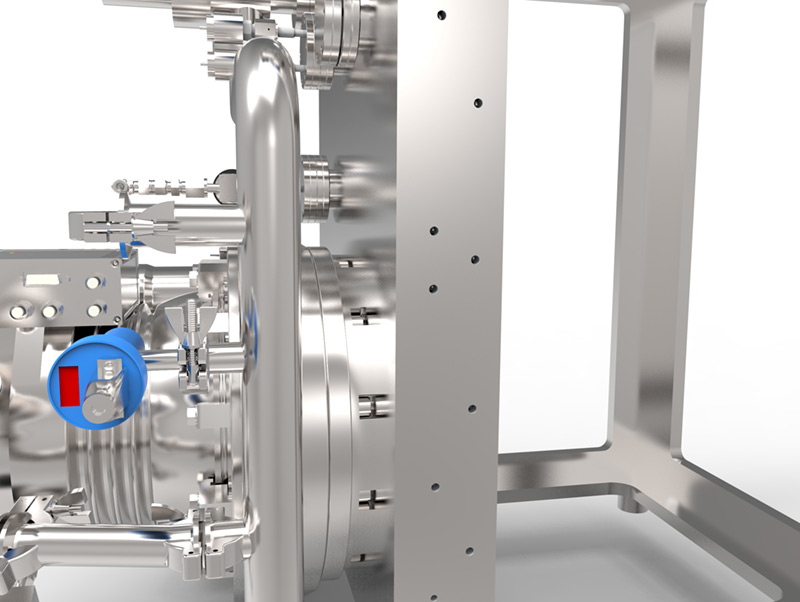
The PVD 200 was re-designed to mount the high vacuum valve directly to the process chamber without the 4" half nipple and accommodates a larger 790 L/s pump, 1250L/s pump, or CTI8 pump. This allows the PRO Line PVD 200 to reach lower base pressures and faster pumpdown times than similarly equipped systems. The CTI10 Cryo pump does require a pumping port nipple and will limit some options.
DEPOSITION PERFORMANCE
TORUS® Magnetron Sputtering Sources
The PRO Line PVD 75 is one of Kurt J. Lesker's most versatile thin film deposition systems offering single and multi-technique deposition options including thermal evaporation, magnetron sputtering (TORUS), and electron beam.
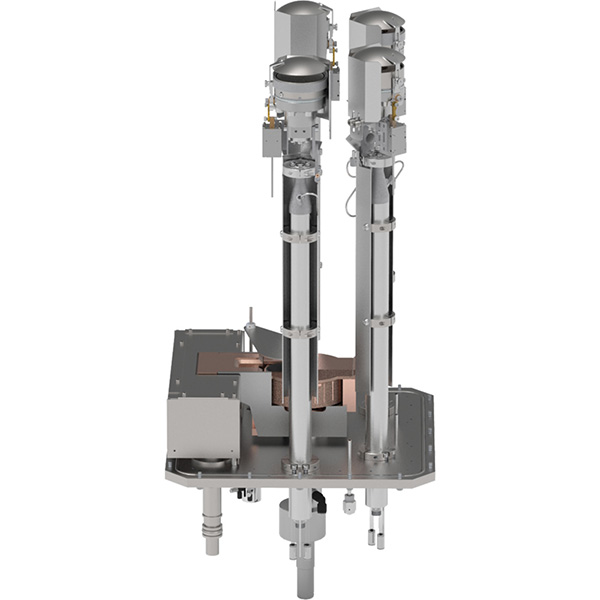
Only KJLC offers Mag-Keeper sputter sources with zero o-rings in the cathode body and a magnetically coupled target to allow for easy target changes. Our "patent pending" cooling well design enables operation at power densities UP TO 200 watts/.in2 (material dependent). This cathode is designed to sputter up to a 0.375" thick targets. Without a hold down clamp or dark space shield this cathode is capable of running as low as ≤ 1mTorr. The unique dome shutter design eliminates the need for additional cross contamination shielding required with standard flip or swing shutters.
To learn more about sputtering rates and uniformity, click here.





E-Beam Sources
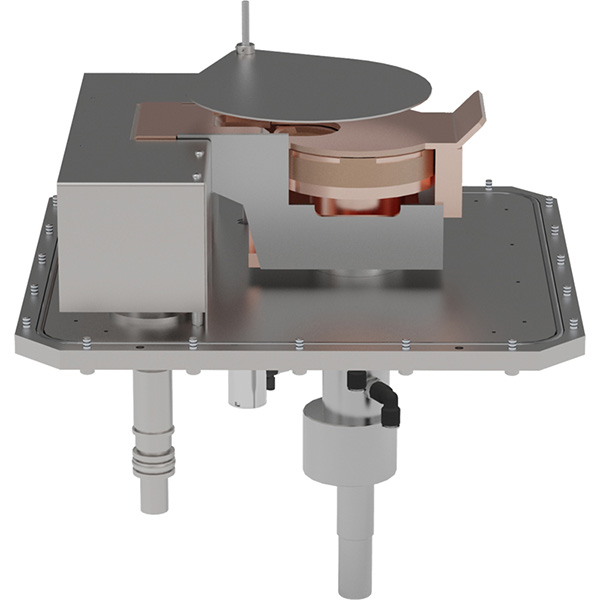
KJLC E-beam sources are also designed to eliminate unnecessary o-rings, seals, and feedthroughs to lower pumpdown times and provide excellent base pressures. Only three feedthrough's are required for the KJLC E-beam source and there is no dynamic water to vacuum o-ring seal in this design which greatly reduces the risk of a water leak in the vacuum chamber.


Thermal Evaporation Sources
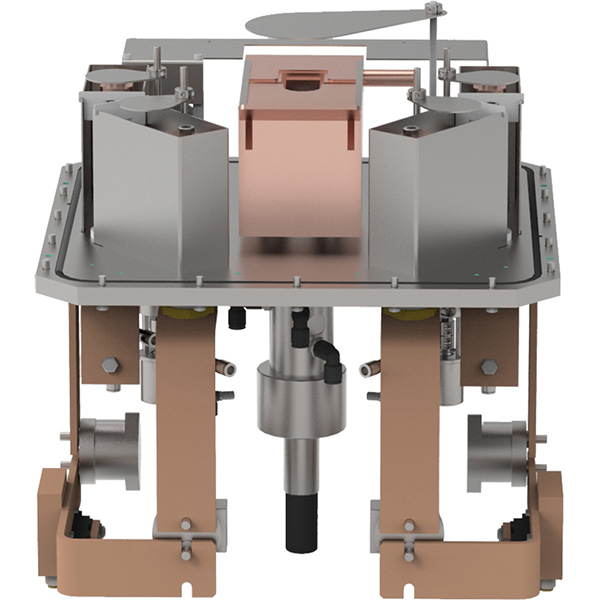
Thermal evaporation sources typically centered on the substrate fixture have been moved to the outer edges of the fixture to allow for better uniformities. The fixtures allow a source adjustment of up to an inch to allow for optimization to a particular application.
Typical Deposition Uniformities
| Sources | Wafer size | Uniformity |
|---|---|---|
The PRO Line PVD 200 has been designed for optimal uniformities and allows ultimate base pressures otherwise not achievable in modular R&D systems until now. The chart above shows average expected uniformity by deposition type and substrate wafer diameter. Thickness measurements were made using a Profilometer or spectral reflectometer. The actual uniformity achievable will be a function of the final configuration of the system and process parameters.
TORUS® sources are operated at typical sputtering pressures (< 20 mTorr) and utilize Si wafers for deposition. SiO2 Target run with RF Power, film thickness >=500Å. Al Target run with DC Power, film thickness >=1500Å. Ni Target run with High Strength TORUS® & DC Power, film thickness >=1500Å.
KJLC electron beam deposition runs utilize Si wafers for deposition. Ti evaporant material with film thickness >=1500Å.
- All Films are measured on a properly calibrated Profilometer, Reflectometer or Ellipsometer (if applicable).
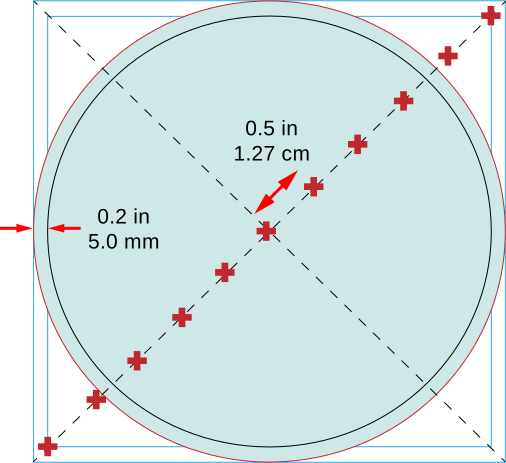
- Measurement points are taken starting at the center of the substrate and then radially outward every 0.5 inches (12.7mm), nominally (reference figure to the right).
- Uniformity calculation formula is: ((Max - Min) / (2 x Avg)) x 100% with a 0.2 inch (5mm) edge exclusion.
PUMPING OPTIONS
Vacuum Pumping Options
- Cryo Pump – This package replaces the 790 L/sec turbo pump in the base system with a CTI-8F 1500 L/sec cryo pump. Base pressure for a properly conditioned chamber is 5.0 x 10⁻⁸ torr (6.67 x 10⁻⁸ mbar).
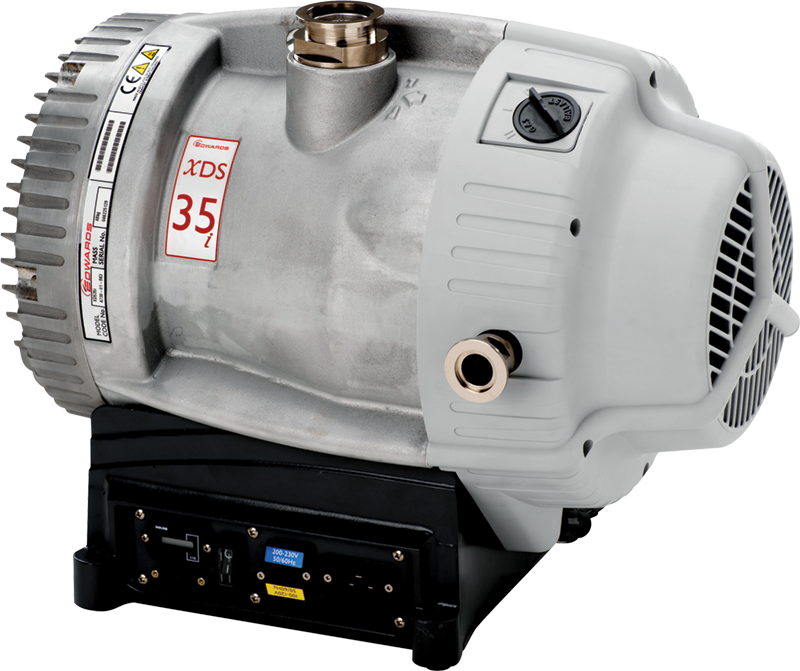
- Dry Pump – Edwards nXDS10i – 6.7 cfm (11.4 m3/hr) Scroll roughing pump.
- Dry pump – Edwards XDS35i – 20.6 cfm (35 m3/hr) Scroll roughing.
High Vacuum Valves
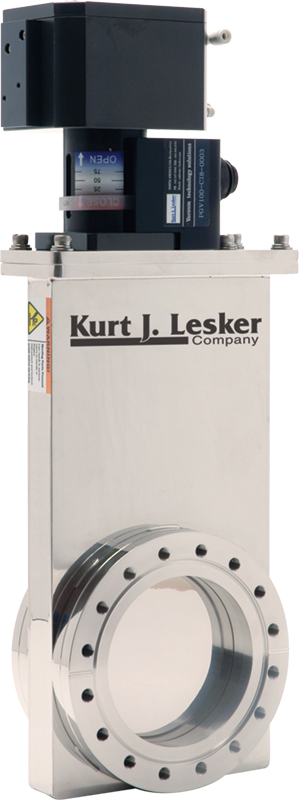
- 3-Position gate valve for CTI-8F 1500L/s Cryo Pump
- 3-Position gate valve for Pfieffer 790 L/sec turbo
- Variable position downstream pressure control valve
Upstream Pressure Control
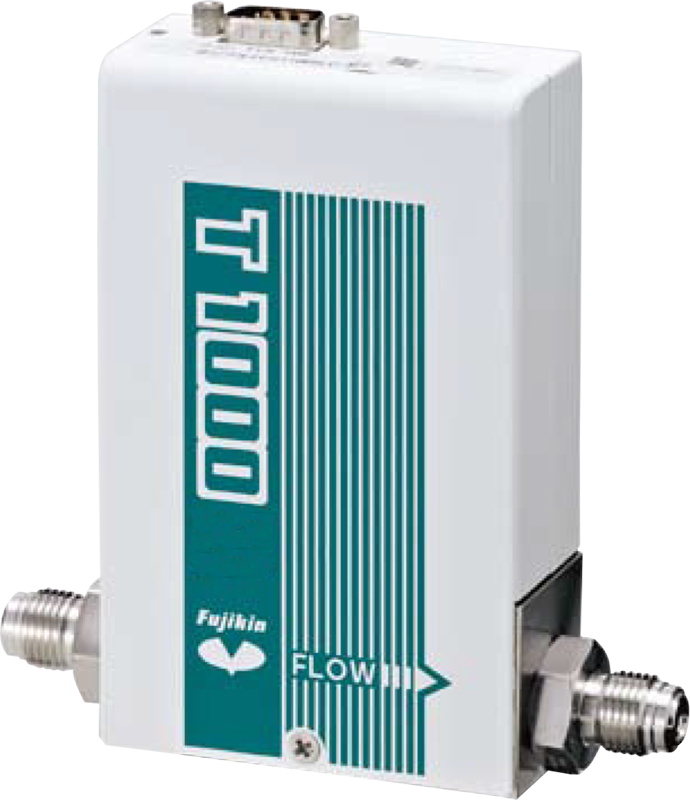
- Up to four Fujikin FCST1000F Mass Flow controllers and a 100mTorr Capacitance Manometer.
DEPOSITION SOURCE OPTIONS
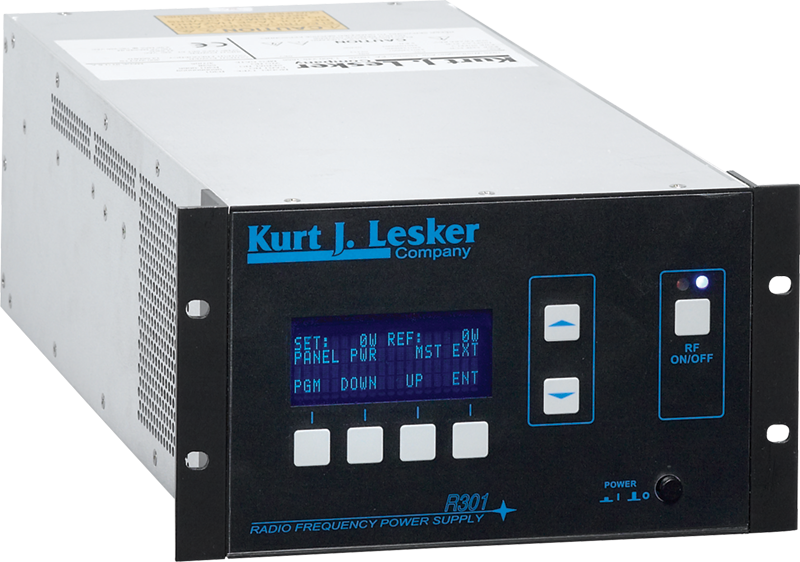
Magnetron Sputtering Source Power Supplies
- IMPULSE™ - 2kW Pulsed Power Modules for Advanced Magnetron Sputtering
- Available in sputter / bias configurations
- For more information click here
- 500W, and 1kW, and 1.5kW KJLC® DC power supplies
- 300W and 600W KJLC RF power supplies
- 2kW (pulsed) DC power supply
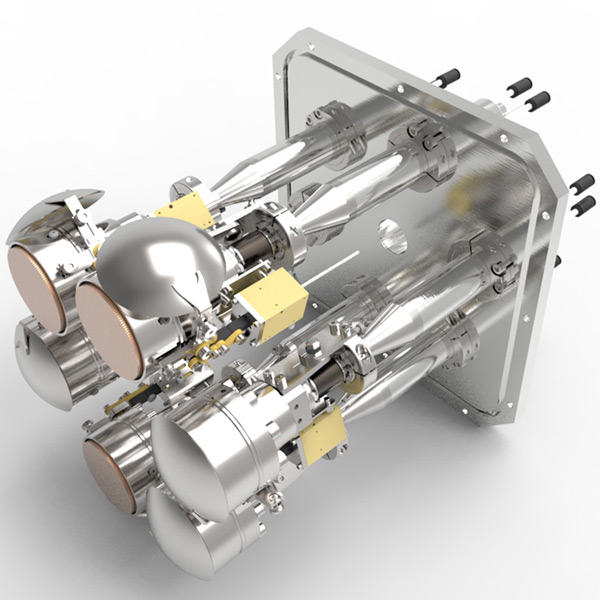


TORUS® Magnetron Sputtering Source (Up to eight)
- Up to eight KJLC TORUS® 2" or 3" magnetron sputtering sources. Flex head assembly and high strength magnet assemblies options available.
- Up to six KJLC TORUS® 4" magnetron sputtering sources. Flex head assembly and high strength magnet assemblies options available
For more information on our new Mag Keeper sources please see the following link.
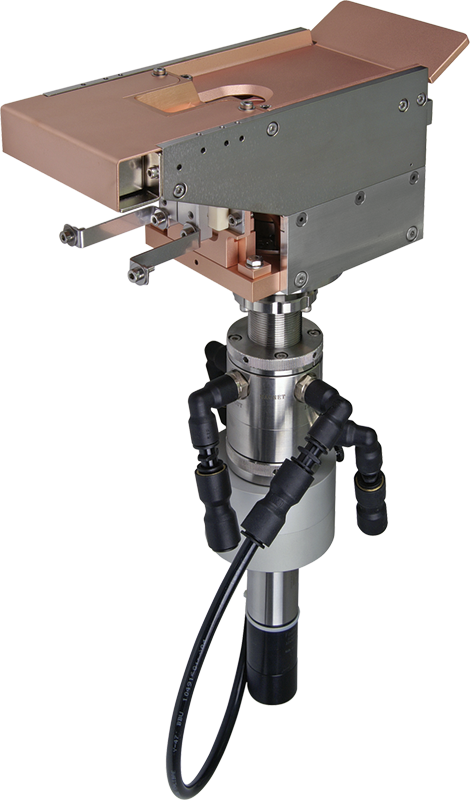
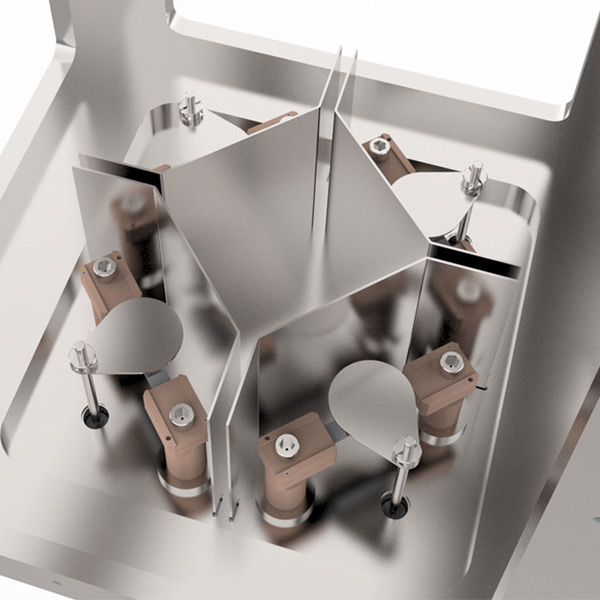


Thermal Evaporation Source
- KJLC Thermal evaporation (TE) assembly, Up to six 4" thermal evaporation sources (in sequential or co-deposition configurations)
- Standard thermal power supply, up to 12V or 400A, max 2kW applied power
- High output power options, up to 12V or 600A, max 2.5kW applied power
- KJLC 10cc LTE (Low Temperature Evaporation) source, suitable for Organic and low temperature materials (0-550°C)
- Quartz crystal controller is available with thermal options
MATERIALS DEPOSITED: POWER SUPPLIES

DC Power Supplies
- When sputtering conductive materials, DC power is a simple, economic option.
- Examples of materials that can be sputtered with DC power includes: Al, Cu, Co, Hf, Mo, Ni, ITO, Zn.
Sputtering Rates: Conductive materials with good thermal properties can be sputtered at higher power densities. This results in generally higher sputtering rates resulting in higher throughput.
RF Power Supplies
- When sputtering non-conductive materials and ceramics.
- Examples of materials that can be sputtered with RF power includes: Al2O3, SiO2, HfC, LiF, ZnO.
Material stoichiometry is maintained much easier than with reactive sputtering.
Sputtering Rates: RF power density is generally 1/3 of DC due to the higher frequency of RF power. In most non-conductive materials, the sputtering rates are much lower than conductive materials based on their material properties.
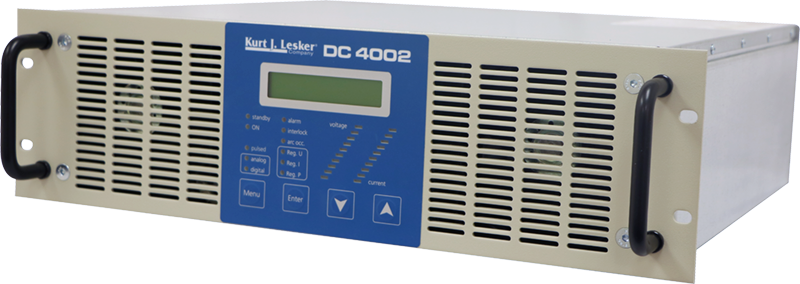
Pulsed DC Power Supplies
- When sputtering in a reactive mode, pulsed DC provides the most effective solution.
- Examples of materials that can be sputtered with DC power includes: Al, Cu, Co, Hf, Mo, Ni, ITO, Zn (all conductive materials).
Reactive Depositions will adversely affect DC power supplies. Pulsed DC power supplies eliminate Poisoning typically seen in straight DC processes. However, due to lower duty cycling, rates are typically lower with Pulsed DC.
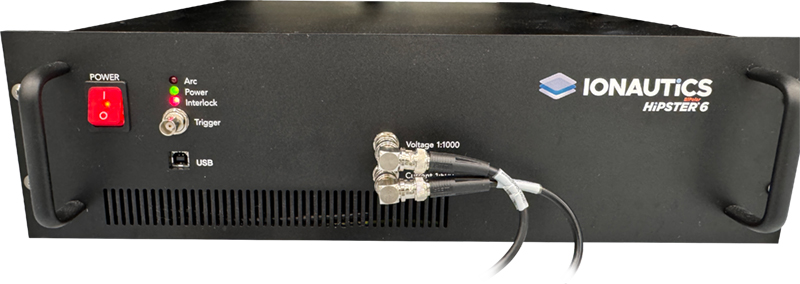
HIPIMS Power Supplies
- HIPIMS enables the ability to achieve high density, hard coatings, and DLC coating properties.
- Examples of materials that can be sputtered with DC power includes: Al, Cu, Co, Hf, Mo, Ni, ITO, Zn (all conductive materials).
Extremely dense, non-porous films are generated as a result of the ionized plasma produced with High Impulse Magnetron sputtering power supplies. For more examples of power types that can be used with target materials - please reference our deposition materials chart.
Mid Frequency or Mid Frequency AC
- When sputtering in a reactive mode, Mid Frequency provides the fastest deposition rates possible.
- Examples of materials that can be sputtered with DC power includes: Al, Cu, Co, Hf, Mo, Ni, ITO, Zn (all conductive materials).
Extremely fast reactive deposition films are possible with a mid-frequency power supply. This will require two dedicated linear cathodes per power supply, but increases throughput dramatically.
SUBSTRATE OPTIONS
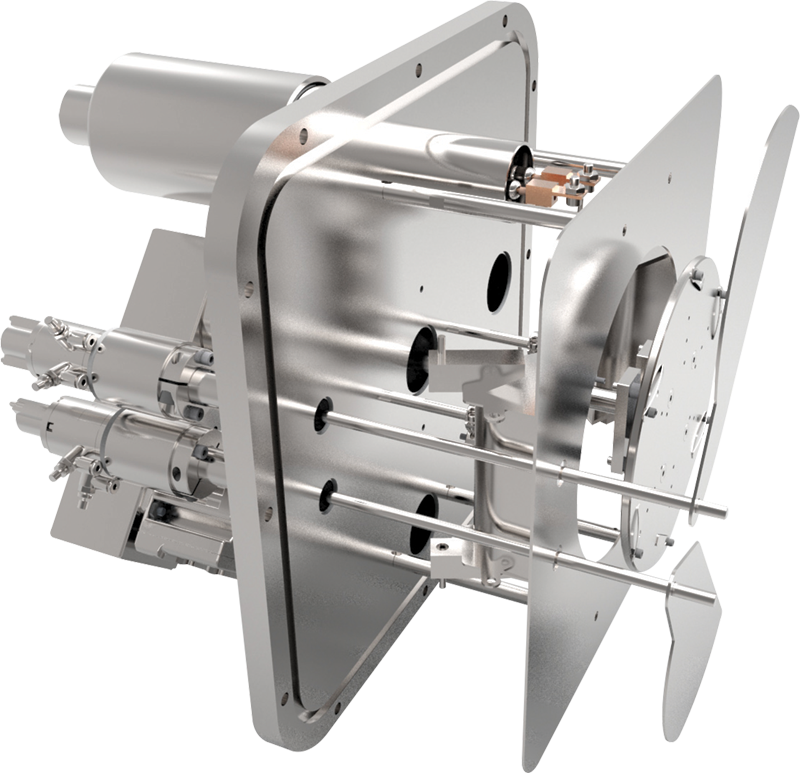
Standard Substrate Fixtures
- Suitable for substrates up to 8" (200mm) in diameter
- 20 RPM, 850°C heat or water cooled
- Up to 100W RF bias
- Automated transfer
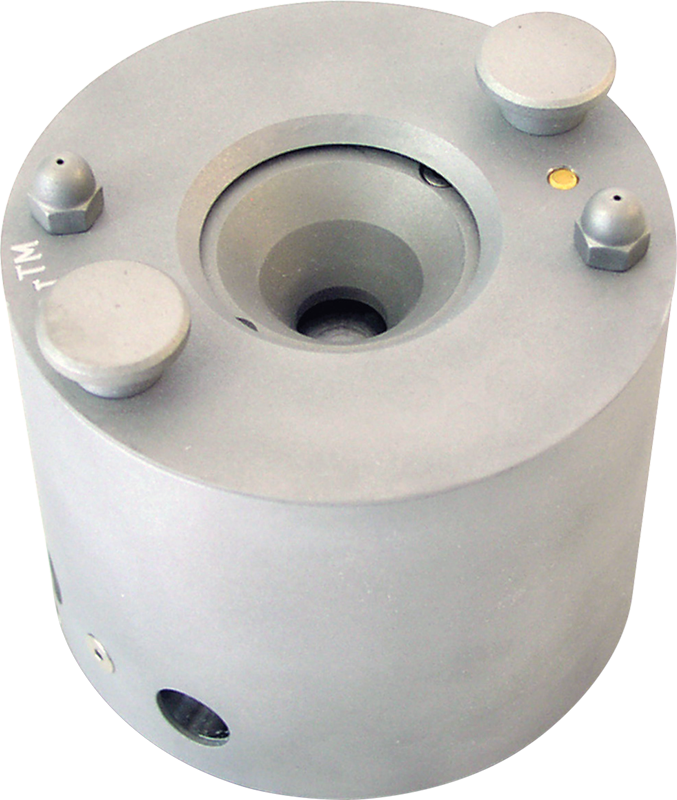
Ion Source
- eH400, End-Hall permanent magnet ion source or KDC40 Gridded ion source
- eH400 End-hall source is a versatile ion source capable of high current, low energy ion cleaning or etching while limiting damage to substrate surfaces
- KDC40 Gridded ion source allows precise beam shaping with interchangeable ion optics and independent operation of important ion beam properties
Reactive Depositions
- One Fujikin FCST1000F Mass Flow controller and a 100mTorr Capacitance Manometer
- Up to three Fujikin FCST1000F Mass Flow controllers for a reactive gas.
- Substrate gas ring is available
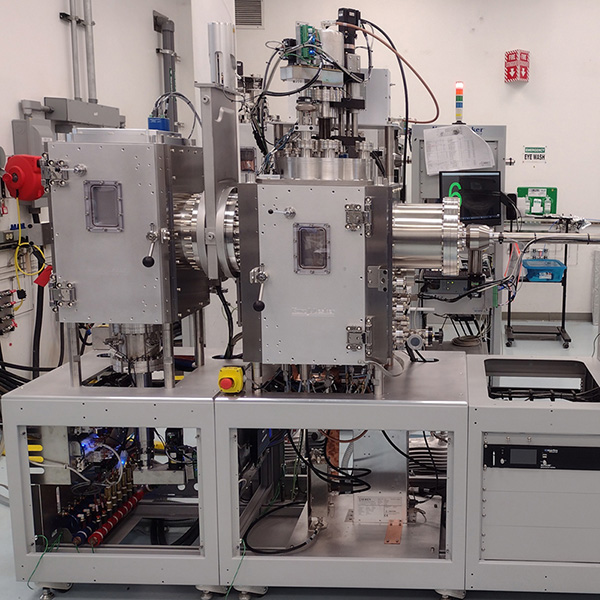


Load Locks
- Low profile design
- Load Lock, turbo pump, and all appropriate gauging
- Compatible with substrates up to 200mm, multisite adapter for smaller substrates
- 67 L/s turbomolecular pump set with isolation valve
- Roughing pump shared with process chamber
- Isolation valve between load lock and process chamber
APPLICATIONS ENABLED ON THIS PLATFORM
Our cutting-edge equipment is engineered to conquer the toughest research and application challenges–delivering powerful, adaptable solutions across a broad spectrum of deposition processes. Whether you're pushing the boundaries of thin film technology or refining advanced materials, our platform is built to elevate your work.
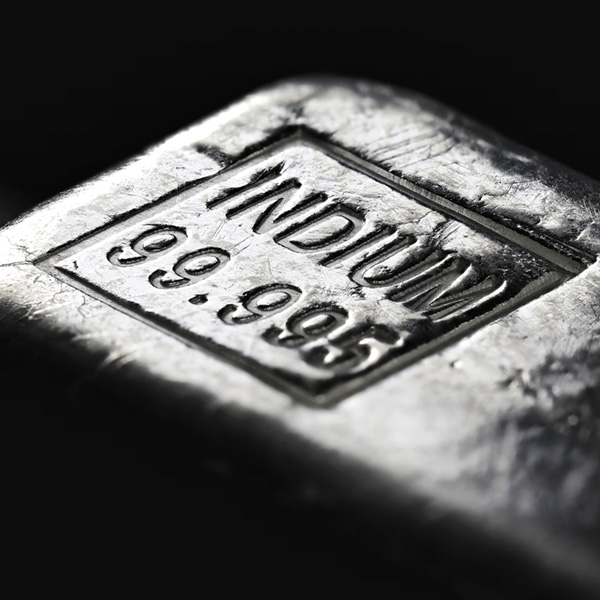
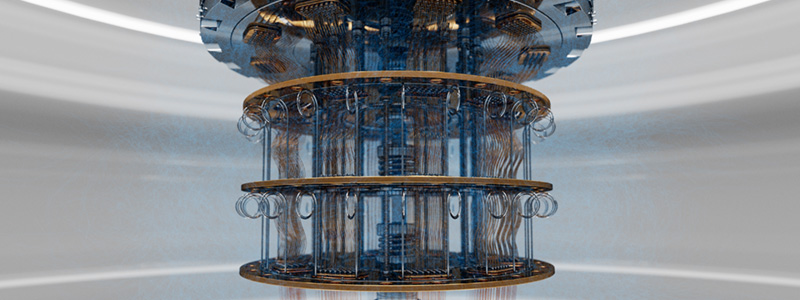
Indium Bump Bonding for Superconducting Quantum Circuits
Indium bumps to create electrical connections in electronic devices, commonly found in flip chip packaging for semiconductor and superconducting applications.

Architecture Overview
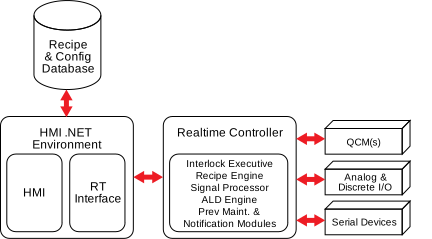
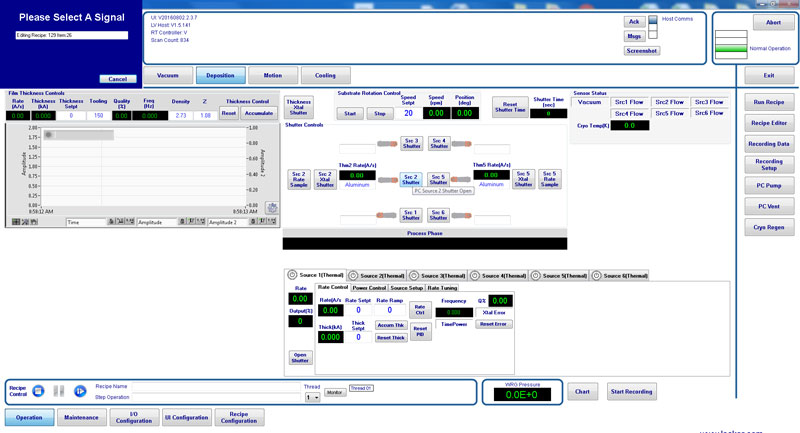
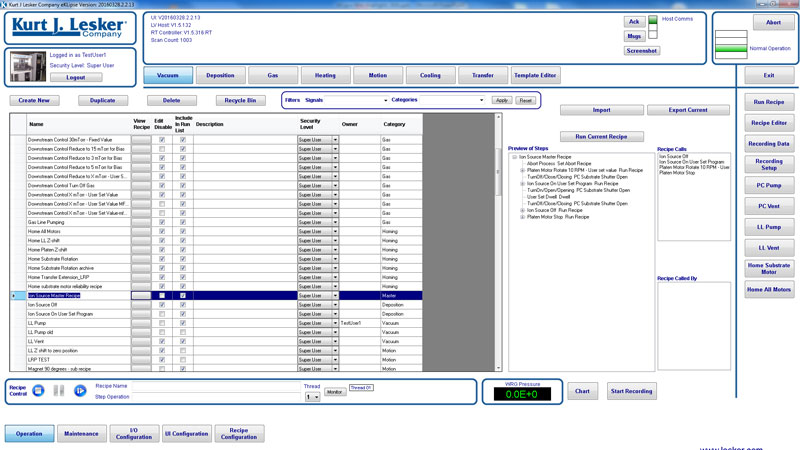
Kurt J. Lesker Company® eKLipse™ Controls Software is utilized on all KJLC platforms. The eKLipse™ controls platform utilizes a .NET application running on a Windows PC for its User Interface and Recipe Editor. Equipment automation is accomplished via a standalone Real Time Controller.
AI-Ready, Powered by eKLipse
Our process equipment platforms are engineered for seamless integration with external AI tools, enabling real-time recipe optimization, predictive analytics, and remote decision-making. Powered by eKLipse software, each system ensures intelligent control with minimal complexity allowing you to scale efficiently in a data-driven environment.
Learn More About eKLipse AI-Ready Thin Film Deposition Systems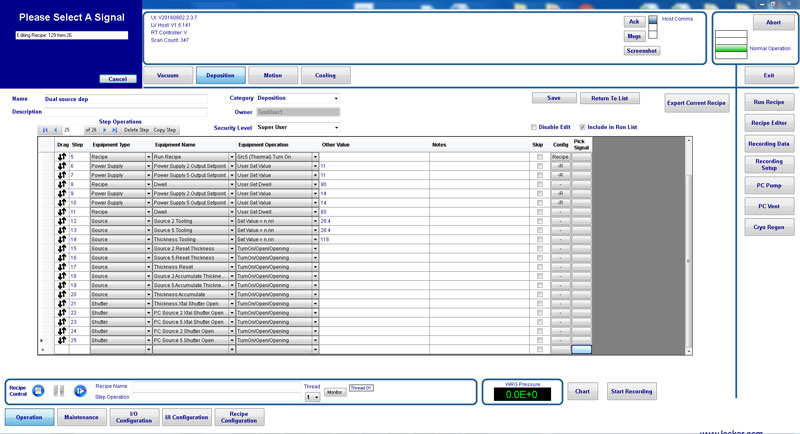

Recipes
- Graphical Recipe Builder – Easily create recipes by clicking on the desired component and set that item's attributes
- Scripted Recipe Builder – A more traditional "scripted" recipe editor exposes more details for setting or checking the value of any system component during a process.
Reliable
- Real Time Controller – The system operates independently of the Windows software package and will continue the recipe should the software / computer malfunction.
- Independent Thermal Evaporation Thin Film Control – There is no third party software requiring a "handshake" or "handoff" between the Systems Manufacturers software and the thin film controller's software.
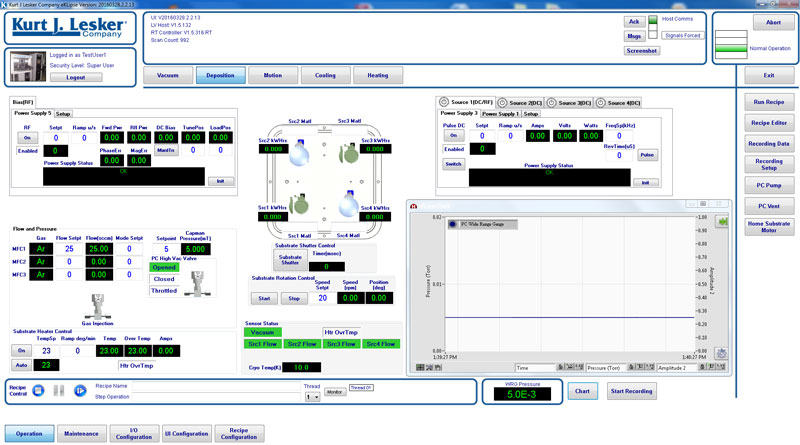
Unlimited Recipes, (import/export capable)
- Unlimited recipes with user security level features
- Recipe import/export capability (for transferring recipes between similarly equipped tools)
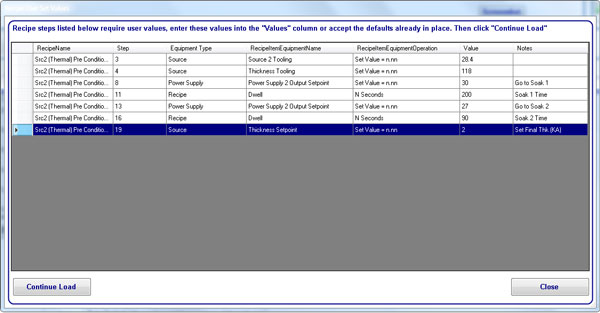
- Any recipe step can be configured to allow the user to alter a value, enabling process condition changes, without affecting the master recipe. As an example, at the time of execution, the recipe can prompt the user for the desired deposition thickness, or power setting.
- Consistent User experience across all deposition techniques and KJLC platforms (Sputter, Thermal, EBeam, ALD)
- Multi chamber and multi PC control for cluster tools
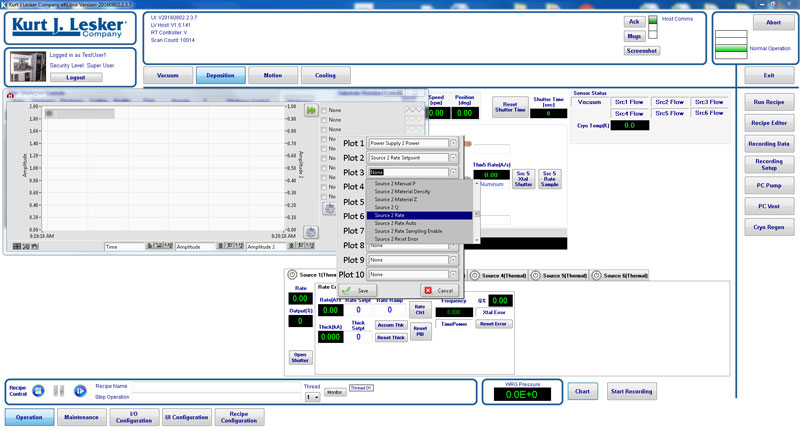
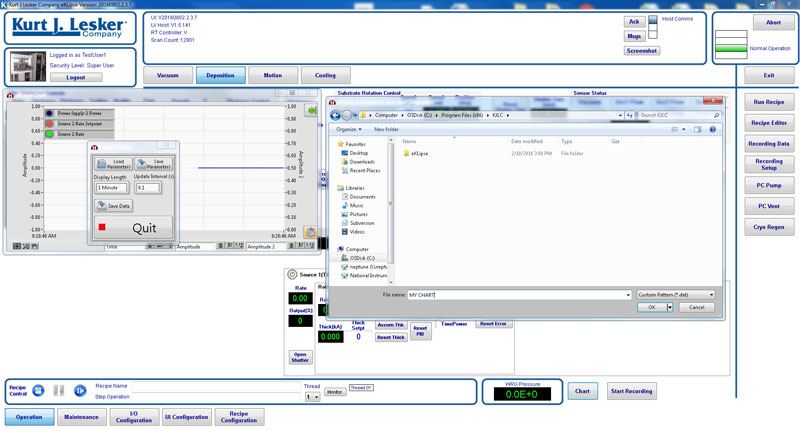
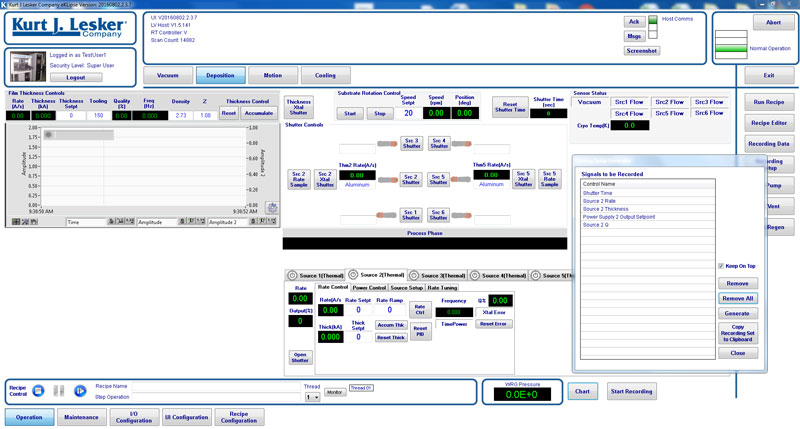
Custom Chart Recorder and Datalogging
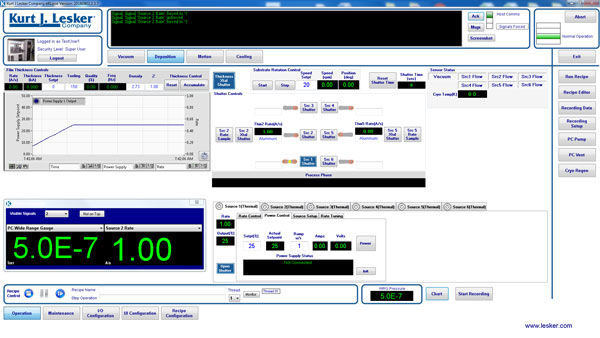
- Custom Chart with up to 10 simultaneous plots
- Chart Recorder can be used to display any setpoint or feedback parameter
- Automatic datalogging of each recipe step for all recipes
- Chart data and configuration can be saved
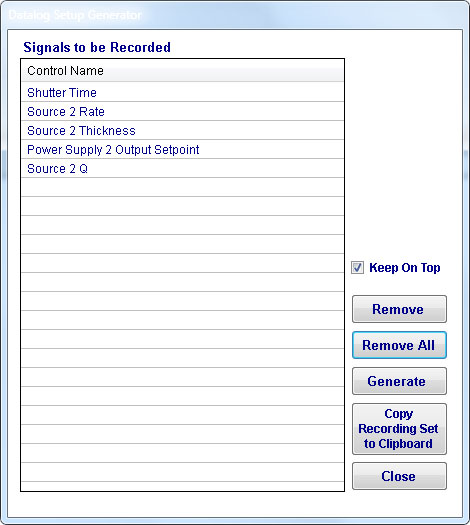
- Graphical selection of signals to be recorded
Custom Maintenance Counters
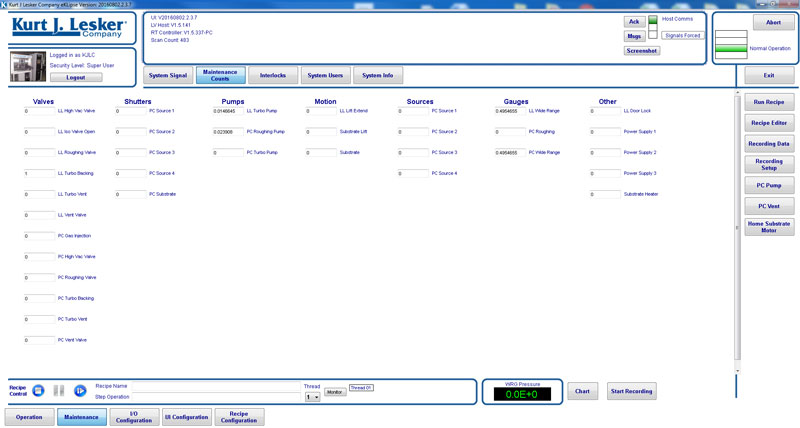
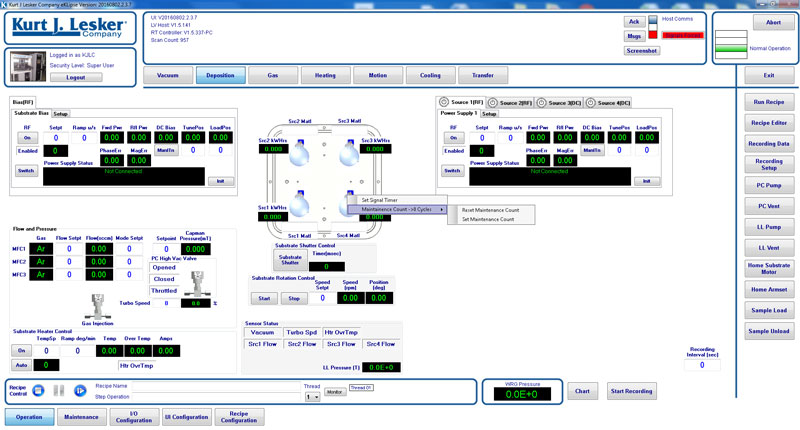
- Custom Maintenance Counters are available for each component
- Periodic Maintenance interlocks and recipe checks can be configured for any maintenance counter
- Sputter Target kiloWatt*Hour and custom material usage tracking
User Security
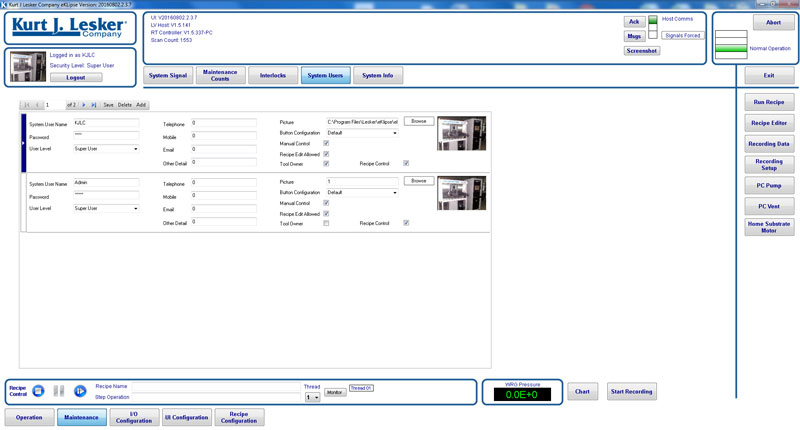
- Supports multiple user accounts and password levels with custom security access for recipes and screens
- Software screen access can be customized per user
- Recipe editing and manual operation features can be assigned on a per user basis;
- Users with full access have the ability to edit recipes and control interlocks. Restricted access users will be limited to running certain recipes and have no control over interlocks.
- Every control object can be assigned to a standard user security level.
- Individual screen access can be separately assigned to any user.
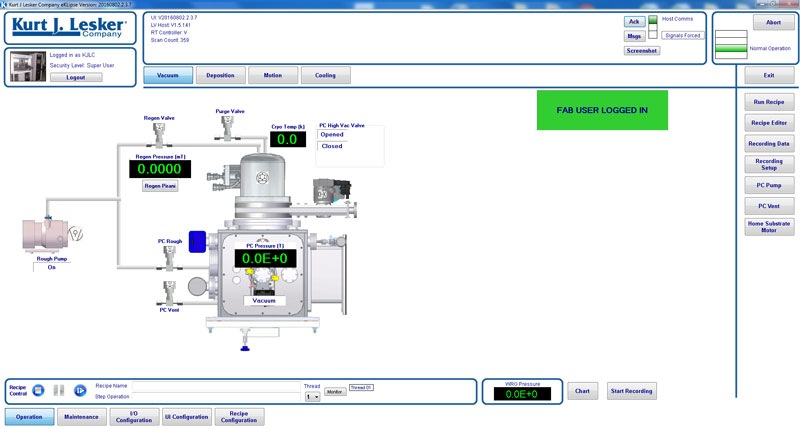
Multi User Facility Features
- System event log captures all user login/logout events, all recipes executed, and system status messages
- Interlocking of vacuum and deposition equipment provides continuous system status monitoring while restricting unapproved system usage (no need to 'power off' system screen or PC)