









TSV/TGV SERIES
Uniform, High-Rate Deposition for Complex TSV/TGV Structures.
The Kurt J. Lesker Company® TSV/TGV Series specifically designed for depositions of Through Silicon Vias (TSVs) and Through Glass Vias (TGVs). A technically superior chamber design enables the deposition of adhesion, barrier and seed layers with high aspect ratio (up to 8:1) that are part of TSV and TGV architecture. KJLC's eKLipse software control system enables stable high deposition rates, with high uniformity, allowing 10 wafers to be processed before breaking vacuum.
TSVs and TGVs are vertical electrical interconnects formed directly through silicon wafers or glass substrates to enable high-density, high-performance 3D packaging. TSVs are etched holes in silicon that are insulated, lined with barrier and seed metals, and then filled-typically with copper-to create low-resistance, high-speed connections between stacked chips or between a die and an interposer. TGVs serve a similar purpose but are formed in glass, which offers advantages such as low RF loss, excellent thermal stability, and smoother surfaces. Together, TSVs and TGVs provide compact, vertical signal paths that reduce wiring length, improve electrical performance, and enable advanced heterogeneous integration.

AI Ready
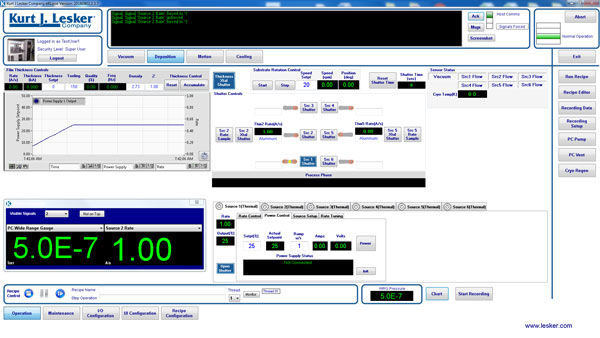
eKLipse software powers Kurt J. Lesker PVD and ALD platforms, seamlessly connecting deposition with In-situ and ex-situ measurement, and your AI-driven decision making into one automated, high-throughput workflow. Click here to learn more about eKLipse AI-Ready Thin Film Deposition Systems.
TSVs and TGVs can be efficiently fabricated in TSV/TGV Series physical vapor deposition (PVD) systems. Interested in creating TSVs and TGVs for your application? Then let's look at the key building blocks you will need for of a TSV/TGV tool:
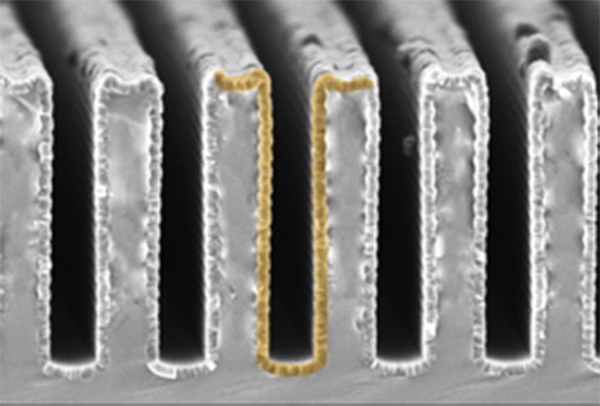
Atomic Layer Deposition (ALD) for conformal coating into High Aspect Ratio (HAR) structures of > 10:1 such as used for TSV/TGV.
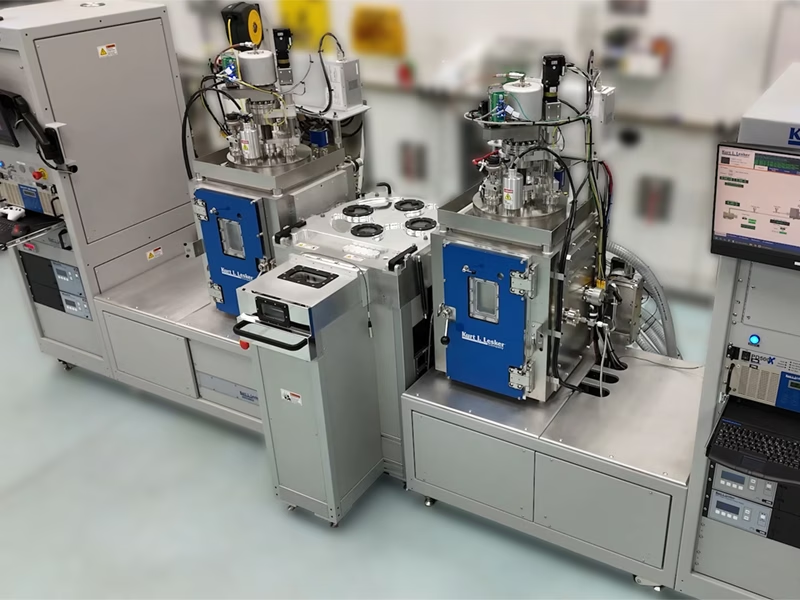
Dual TSV system with a multi-substrate common load lock and robotic transfer. Shown transferring to a dedicated Nitride chamber with HiPIMS magnetron power supply and HiPIMS bias capability.
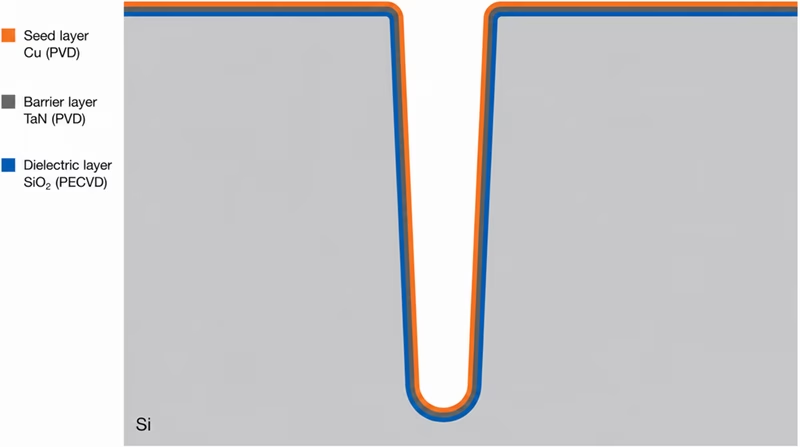
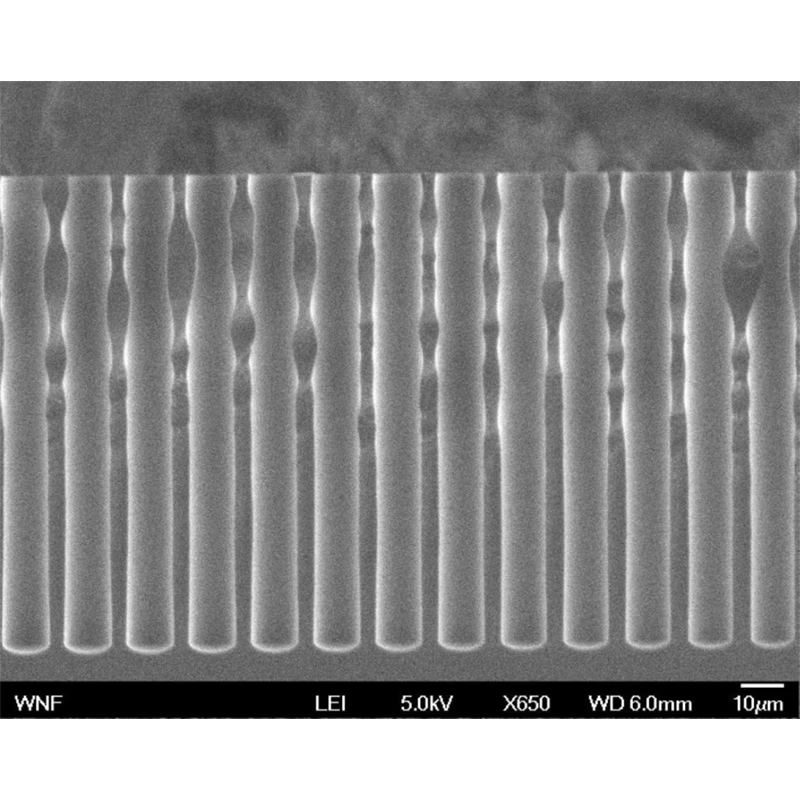
High-aspect-ratio TSV with dielectric (non-PVD), PVD TaN barrier and Cu seed layer.
Features Available on TSV/TGV SERIES Systems
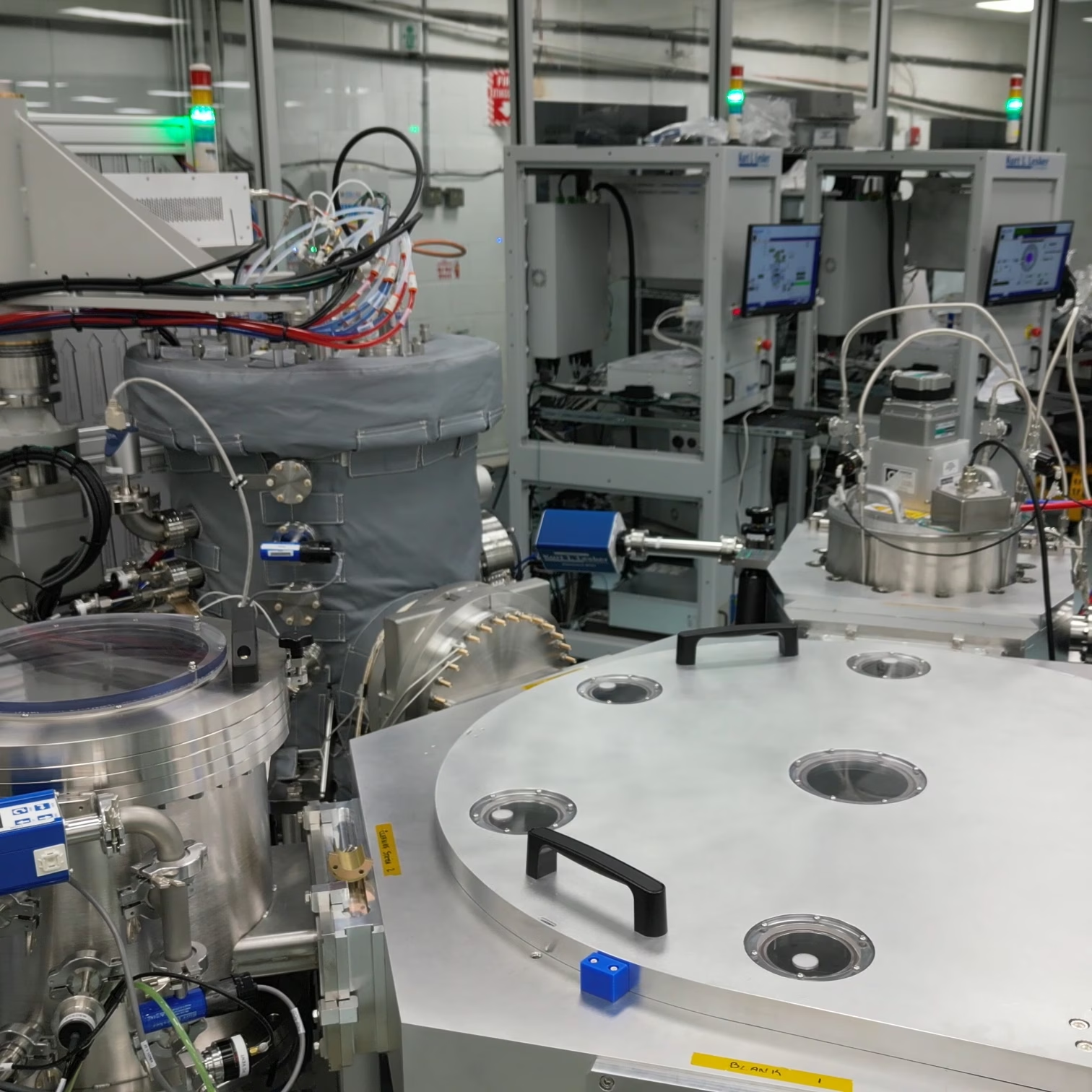
Application Driven Chamber Designs
Single process chamber or dedicated process modules - each process chamber features an optimized geometry and size to promote excellent film uniformity and efficient material utilization.
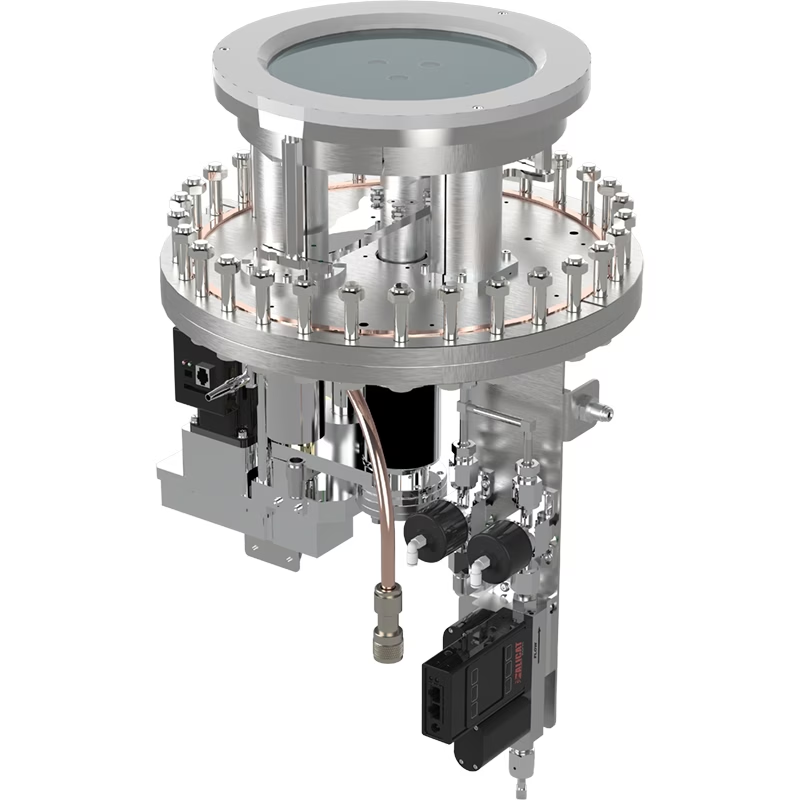
Substrate Stage
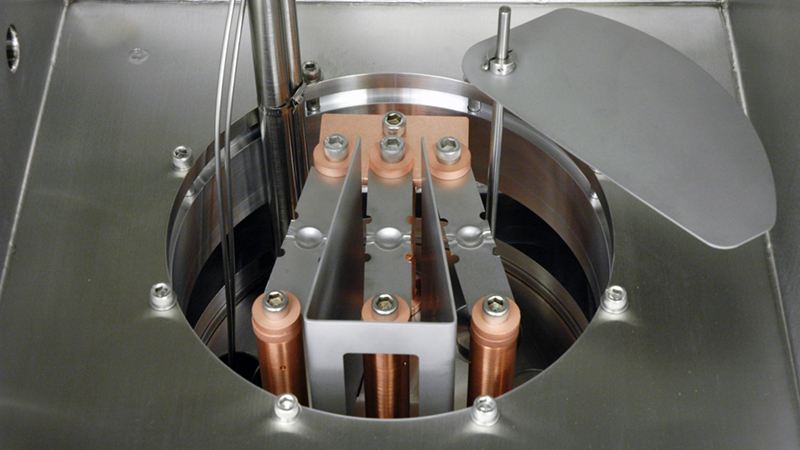
Rotation heating or cooling available to improve film coverage and reduce voids. Heating of the substrate can assist in film densification, film adhesion and smoother morphology, while some applications benefit from cooling.
Plasma/Ionization Options
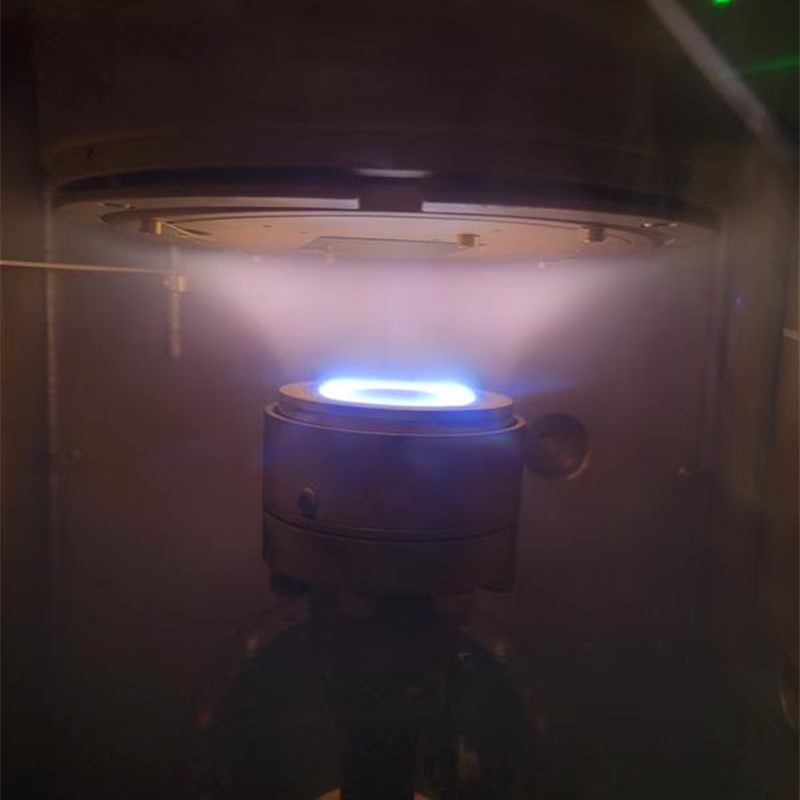
Alongside DC, pulsed-DC and RF options (material dependent) Kurt J Lesker is expert in the use of HiPIMS, a technique that creates a high level of metal ionization resulting in better sidewall step coverage at lower pressures. HiPIMS can also be added to the substrate for bias, which can increase side wall adhesion. OES (optical emission spectroscopy) is used to monitor plasma chemistry, particularly in reactive sputtering.
Deposition Sources
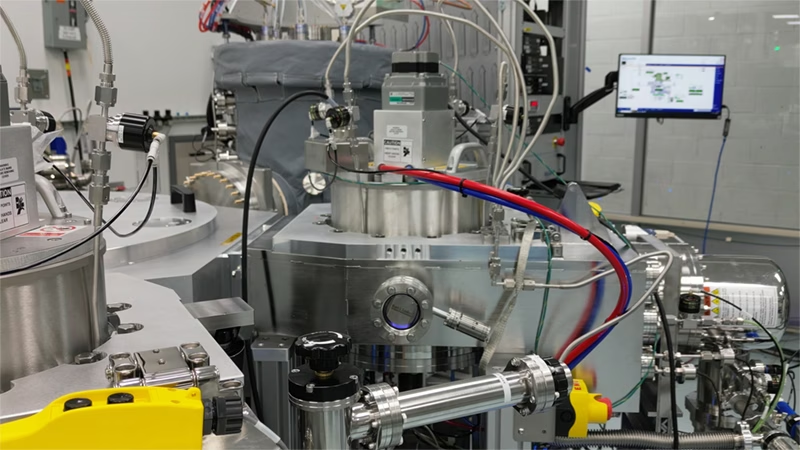
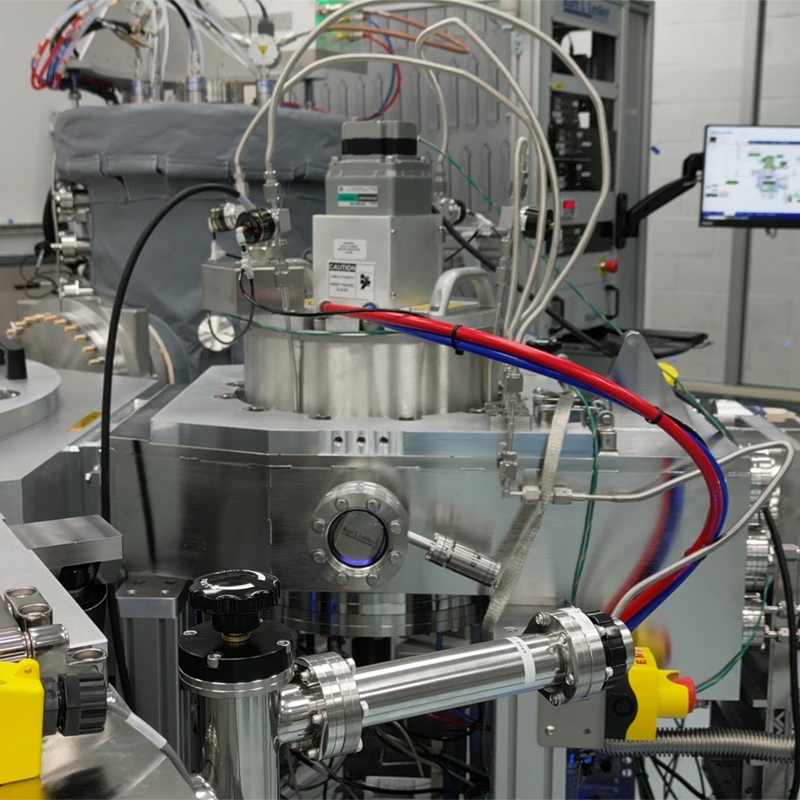
Full Face Erosion (FFE) KJLC TORUS MagKeeper sputter sources. Ideal for TSV and TGV deposition due to their magnetic design and high-density plasma generation provide excellent step coverage, uniformity, and low-damage deposition inside deep, high-aspect-ratio vias in silicon or glass, enabling reliable barrier and seed layers where conventional sputtering sources struggle. KJLC TORUS MagKeeper sputter sources enable quick and easy target exchange and operate at low process pressure, minimizing contamination and raising sputter deposition rates. Full target encapsulation shutters mitigate cross-contamination.
Substrate Load Lock Options
Single and multiple substrate options available. Dual chamber robotic transfer load lock shown, connected to a dedicated separate metals and nitride chamber.
Typical Process:
- Load wafer loaded into the load lock
- Transfer into a pre-clean chamber for Ar ion etch
- Transfer to Metals chamber for Ti adhesion layer
- Transfer to Nitrides chamber for TiN or TaN Barrier layer
- Transfer to the Metals chamber for Cu Seed layer
- Transfer out for electroplating Cu fill
Bias Options
Available bias options include HiPIMS bias, DC or RF bias. Typically RF bias (50-300eV) is used to attract ions necessary for acceptable sidewall step coverage, however HiPIMS has been shown to be beneficial in certain applications. Kurt J Lesker application engineers are well versed in the use of HiPIMS in this application.
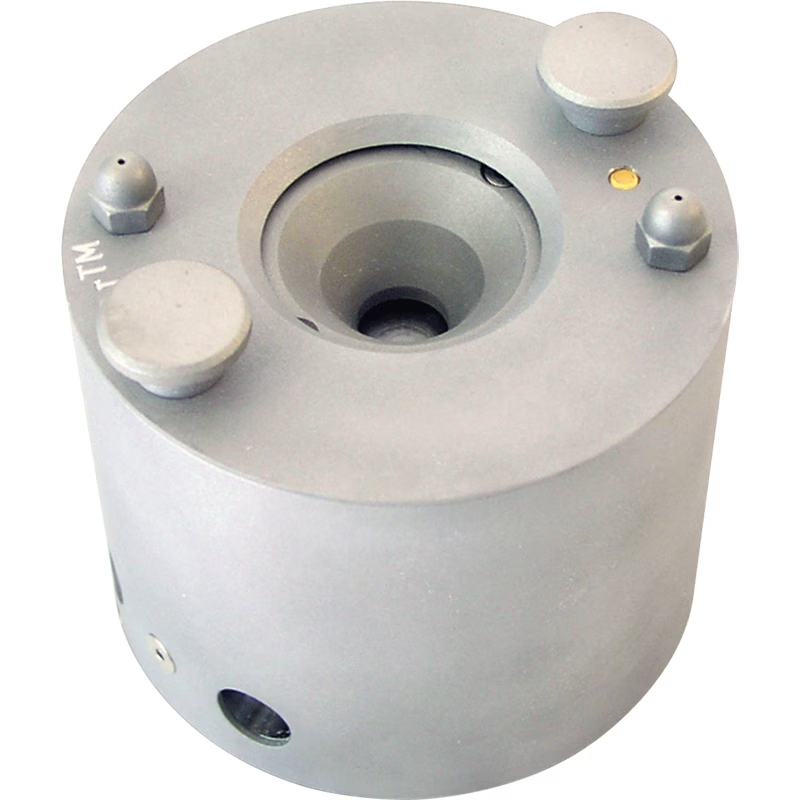
Ion Source
Improves sidewall coverage by directing energetic ions toward the substrate during deposition. This is beneficial when coating high-aspect-ratio vias, ensuring continuous, well-adhered barrier and seed layers essential for reliable copper plating.
Also needed for TSV cleaning. Energetic ions remove native oxides, etch residues, and contaminants from the via sidewalls and bottom, creating a clean, activated surface that enables strong adhesion and continuous barrier/seed deposition.
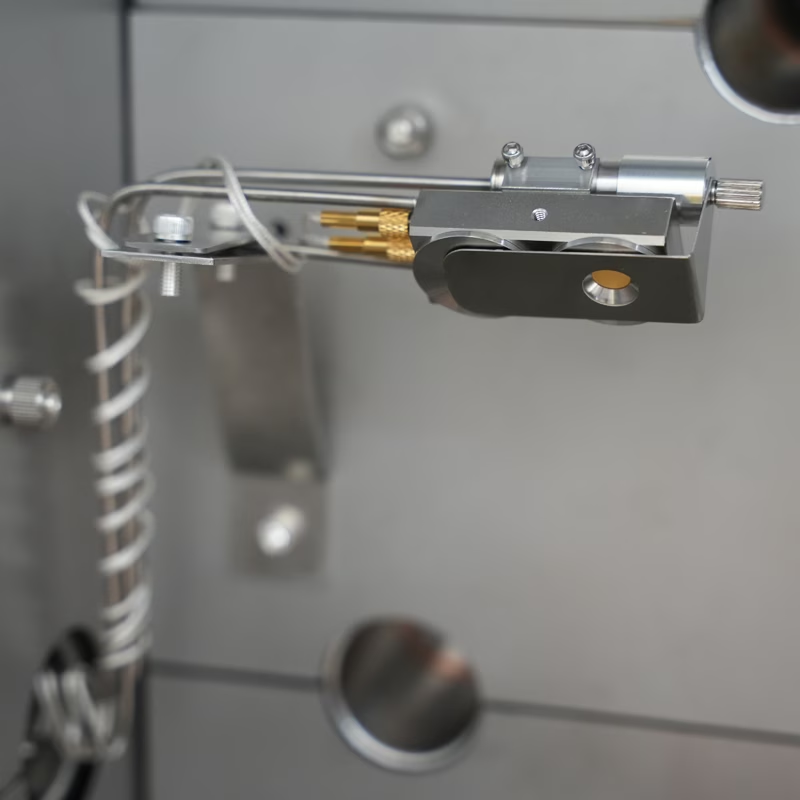
Metrology
Accurate flux monitoring is achieved with fixed-position quartz crystal microbalances, which offer precise control over film thickness and deposition rate through the advanced eKLipse™ software and controls developed by KJLC.
Advanced control available via Plasma Emission Montoring (PEM), which controls deposition process by adjusting reactive gas flow required to maintain an emission intensity. This enables process stability for barrier/seed depotion (Ti, TiN, Ta, TaN, Cu).
RGA integration is also possible. Optional in-situ optical reflectometry or ellipsometry at a viewport for planar thickness.
Cluster Tools
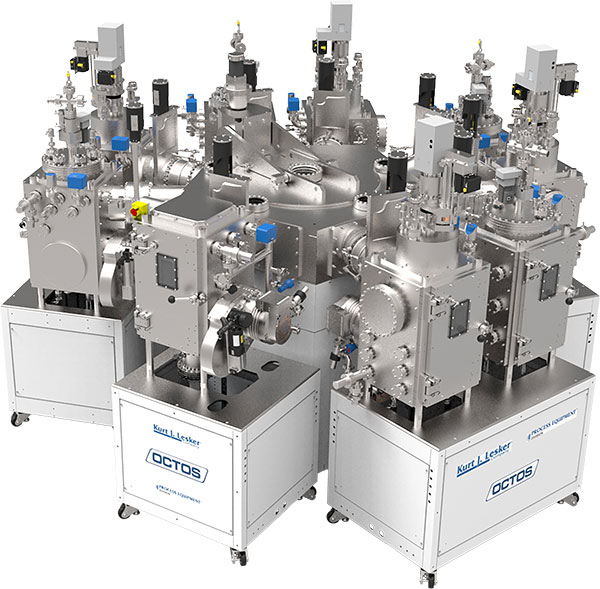
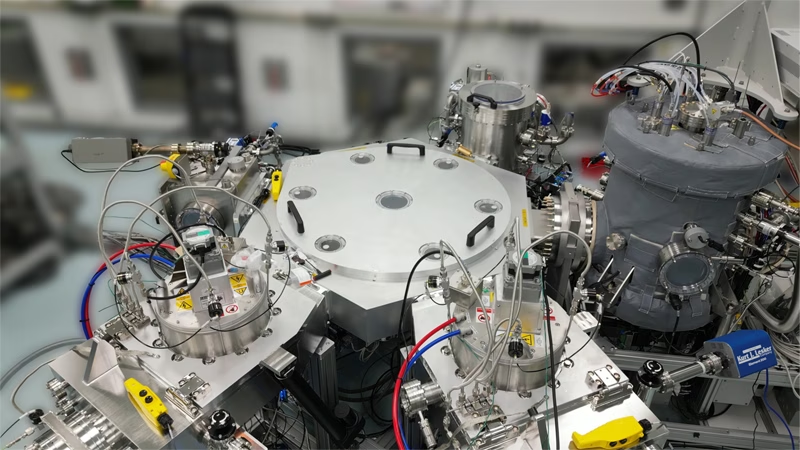
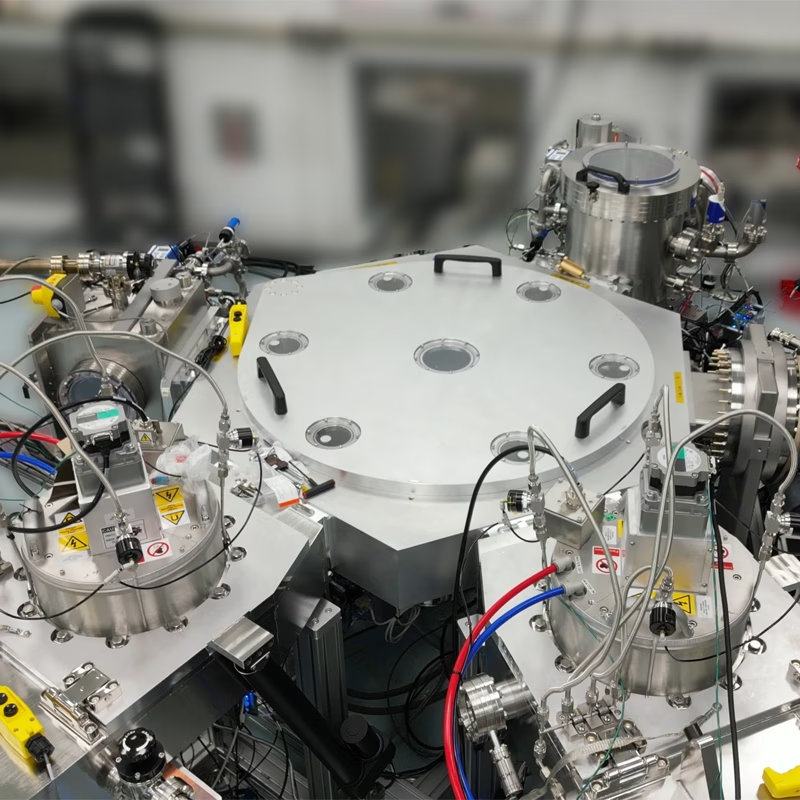
You can build a state-of-the-art TSV cluster tool with KJLC by incorporating a load-lock for multiple wafers, a pre-clean/soft-etch chamber, barrier PVD chamber plus seed PVD chamber, analytical instrumentation, and a central transfer OCTOS robot chamber. Utilizing KJLC's eKLipse controls platform ensures all process modules work seamlessly together. Shown with (2) full-faced erosion cathodes, a UHV confocal multi-source chamber, conditioning chamber and load lock.
Welcome to the Future of Deposition Systems
AI Ready
eKLipse software powers Kurt J. Lesker PVD and ALD platforms, seamlessly connecting deposition with In-situ and ex-situ measurement, and your AI-driven decision making into one automated, high-throughput workflow.
Transform your lab into a closed-loop discovery engine. Let your AI analyze data, design the next experiment, and drive your deposition system - no manual intervention required.
Core Capabilities
- Real-Time Data Acquisition
- Real-Time Recipe Adjustments
- Safety Interlock Infrastructure
- AI Initiated Recipes
- Predictive Maintenance Alerts
- Integrated OPC Interface for Seamless Data Exchange
- Industry Standard, License Free OPC
- Integration Of Modeling, Metrology, and Robots
- Locally Hosted for Offline Security
eKLipse™ Advance Control Package
Designed for precision, the KJLC eKLipse™ Real-Time Controls Platform achieves accurate deposition results.
- The intuitive user interface enables straightforward system operation and process management.
- Integrated remote support and email notification capabilities ensure timely assistance and updates, minimizing downtime.
- The scalable recipe engine allows for seamless import and export of process parameters, supporting flexible and extensible workflows. Comprehensive 'one button' operation facilitates unattended, user-defined process execution, streamlining productivity.
- With compatibility across more than 125 industry-standard device interfaces-including pumps, valves, power supplies, gauges, and metrology equipment-the platform offers broad integration and future-proof scalability.
Global KJLC Systems Service and Support
The Process Equipment Division™ (PED) Global Service Department consists of dedicated, experienced personnel who strive to provide world class customer service.
Ready to Advance Your Research?
Do you have any questions? Click below to get in contact with one of our many experienced team members.